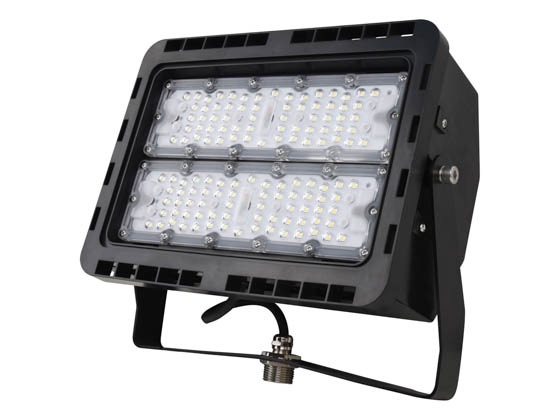
Suitable for various applications: wall mounted around building facades, ideal for classic floodlighting of buildings as well as lighting gardens, paths close to buildings, garages, entrance and driveways.
LED floodlight provides immediate light without start-up or cooling down periods compared to conventional floodlights. They are suitable for outdoor use due to a robust aluminum housing with a safety glass cover.
They can be described as high-intensity, large beamed artificial lights that are often used to illuminate areas outside. They are usually used in playing fields as a sporting event takes place under low light conditions.
The functional and efficient specification of a flood light are:
Housing:
LED flood lights have lamp housing which serves as the core body made up of plastic or metal it prevents light from spilling. It consists of the entire exterior except for the opening or lens. The housing has been designed with certain elements that help with heat reduction while increasing the efficiency of LED lights. Current housings are made using die cast metal since it allows for a single, lightweight body that is more economical to use and produce.
Reflector:
Directionality and quality of light output is affected by the reflector. It is located around or behind the light source in a way as to direct more light towards the opening or lens. The unit has a reflector used to create the desired effect in combination with the lens. two primary types of reflectors are used; ellipsoidal and parabolic.
A parabolic reflector bounces the light away from the reflector in parallel beams. The light cannot be focused because there is no point at which the light converges.
Ellipsoidal reflectors are mainly used for focusable, tight spots.
Yokes:
These light fixtures require a brace to be mounted on any surface. U-shaped yokes are used to assist or suspend most flood lights. the U-shaped yoke surrounds the axis from both sides and creates a rotating axis The yoke is suspended on a single bolt, which is also rotatable providing a second axis .When they are combined together, they allow the fixture to point in any direction in spherical range of motion encircling the yoke.
The yokes in flood lights with LEDs are attached by a clamp to a batten or pipe. This can also be mounted to a package or affixed with mounts on the floor depending on how and where it will be used. Many yokes are remote controlled, and using remote control devices, they can rotate along with the fixture.
Currently, we have several models of led flood light fixtures available in the market. The new models though are much superior in terms of light they provide and amount of energy they consume.
Types of LED Floodlight
Small LED area flood lights: Typically, the smallest type of LED floodlight is one with a 120W rating. A floodlight of this nature normally comes with 11400lm flux with various color temperatures. Being small scale floodlights, they are mostly used to light a small area. They can be effective in the compound of a small estate or as security lights for a small business.
LED shoebox flood lights: They are considered to be the average type of floodlights. they normally need to have a power source ranging from AC 85V – 265V. Widely used in commercial buildings or for spotlight. In the entertainment industry, this floodlight is mainly used in stages during performances. Commercially, companies use them to light the interior as well as the exterior of their premises.
LED Spotlights: for large areas in need of illumination. They are preferred because of the amount of light they offer.they have an output of 27,000 – 30,500LM flux and that is why they are never used indoors. They are generally installed in small stadiums or for gatherings which need adequate lighting at night time. LED flood lights can be customized to suit a user’s preferences and many large consumers are actively making use of this technology suiting their needs.
 Creative Things